Towards an Integral Circularity
11th March 2026

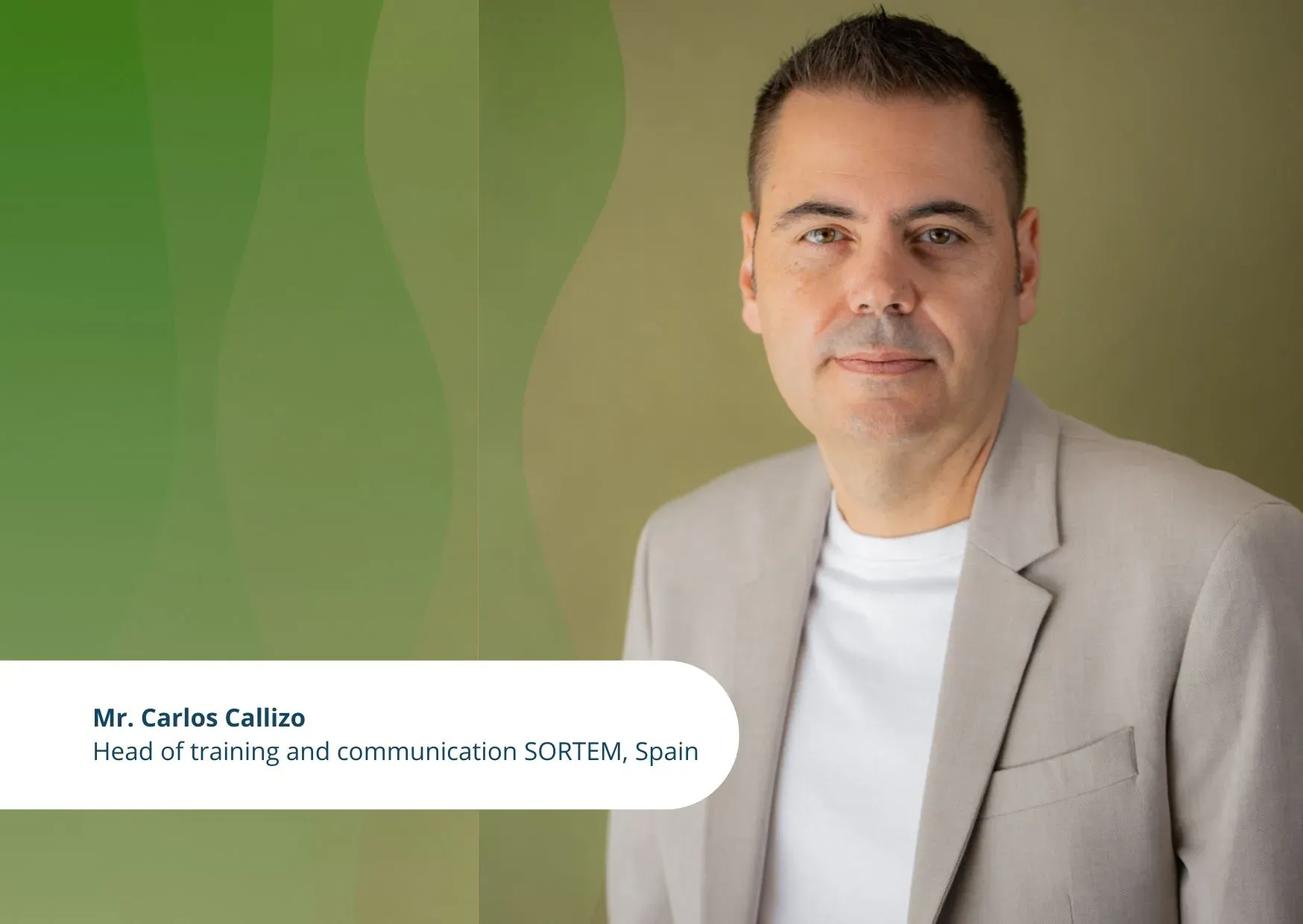
By Carlos Callizo, Head of training and communication SORTEM, Spain
Sustainability in the funeral field can no longer be understood as a trend or a marginal choice. It is a necessity that runs through every level of our profession - from product design to the way we support families and give meaning to remembrance.
At Sortem, we believe that speaking about sustainability means speaking about circularity. A circularity that goes beyond the environmental aspect - reducing waste or using biodegradable materials - to also include the social and emotional dimensions of funeral care. It is about conceiving farewell as an integral experience, where every decision reflects a balance between respect, innovation, and responsibility.
The challenge lies in developing new products and services that reconnect funeral rituals with nature, community, and memory. This is the foundation of projects such as Tanéa, a funeral urn made from Feltwood - a plant-based material created using agricultural residues and fully biodegradable - and Ecocendra, an ecological proposal that replaces the conventional treatment of ashes with an eco-conditioning process allowing their respectful reintegration into the natural environment.
Both projects, presented at Funermostra 2025, symbolize a new way of understanding farewell: as a conscious act that returns to the earth what once came from it. Tanéa embodies the life cycle - transforming remembrance into continuity - while Ecocendra redefines ashes as an active part of regeneration rather than waste. Together, they reflect a vision where technology, aesthetics, and ecological awareness merge to create meaningful and sustainable innovation.
However, sustainability does not depend solely on objects or techniques. It also implies a cultural transformation - learning to look at death through ethical commitment, empathy, and awareness of our impact. Funeral companies have both the responsibility and the opportunity to be agents of change, integrating circularity into their internal processes, team training, and communication with families.
The future of the funeral sector depends on a lived and shared sustainability, where respect for the environment is combined with respect for people. To embrace the circular economy is also to embrace a more human and collaborative model, where remembrance becomes action and every gesture, no matter how small, contributes to regenerating the cycle of life.
At Sortem, we understand that this path can only be followed collectively, uniting knowledge, design, and commitment. Sustainable innovation does not emerge from isolation but from constant dialogue between professionals, institutions, and communities. Every advance - a product, a process, a training program - is an opportunity to demonstrate that sustainability is, ultimately, a form of care: care for the planet, care for people, and care for memory.
Share this article